Progressive Supranuclear Palsy (PSP) is a degenerative brain disease which affects eye movement, balance, mobility, speech and swallowing.
- P - Progressive - the disease gets steadily worse.
- S - Supranuclear - the area affected is above ('supra') the nuclei in the brain.
- P - Palsy - paralysis
PSP and related diseases are often referred to as neurodegenerative diseases.
Progressive Supranuclear Palsy (PSP) involves the progressive death of neurons (nerve endings) in the brain, mainly in the basal ganglia and brainstem, just above the nuclei (hence ‘Supranuclear' being a key part of its name).
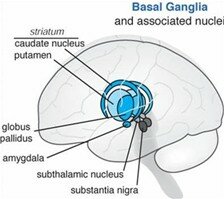
The area affected in PSP controls balance, movement, vision (particularly upgaze and downgaze) speech and the ability to swallow, hence the main symptoms, some of which may not appear or progress at all or until later in the disease. Other symptoms, including behavioural changes and weight-loss, may appear.
Over time PSP can rob a person of the ability to walk, talk, feed themselves or communicate effectively with the world around them, yet they usually remain mentally alert.
PSP affects people in their 40s, 50s, 60s and above, the average age of onset being 62. Like other neurodegenerative diseases, PSP gets worse over time. The average life expectancy of a patient is some seven years, but it is a very individual disease and the rate of progression of symptoms varies considerably from person to person.
PSP can be difficult to diagnose initially, as early symptoms may resemble those of other neuro-degenerative diseases such as Parkinson’s disease, Alzheimer’s disease, Motor Neurone disease or Multiple System Atrophy. As a result many people are initially misdiagnosed, and experts believe that although former research suggests that some 4,000 people have PSP in the UK, the number could be nearer 10,000.
The exact cause of PSP is unknown, however, there is now known to be a complex genetic component involved and the disease itself appears to be triggered environmentally and selectively, perhaps by any one of a variety of neurotoxins, or injury to the head.